
Education


-
Choose from field trips for your grade, and add a tour of the Monarch Sanctuary for your class. Schedule a class field trip
Before booking a field trip, please review our Field Trip FAQs:
-
Use the Museum’s Education Collection in your classroom! Outreach kits are free and available for 2-week check out. Kits contain collections of items, tools, books, posters, models, games, puppets, and curriculum. Put exciting museum specimens and science tools in your students' hands.
Coastal Ecology
Shells, skulls, pelts, and other specimens are in this classroom kit to help your students learn about coastal ecosystems around Monterey Bay. Curriculum focuses on food chains, adaptations, and conservation.
Fossils
Your students can hold a stegosaurus spine, make a trace fossil, and identify fossils using guidebooks and posters. Kit contents inspire students to learn about dinosaurs, fossils, and geologic timescales.
Monarchs and Pollinators
This kit provides museum education collections items and curriculum to explore monarch adaptations, life cycle, and migration. Materials also explore other pollinators including bees, hummingbirds, beetles, moths, bats, and other butterflies. The curriculum includes activities on adaptations like camouflage and mimicry; ideas on using pollinator science in math, writing, and science learning; and activities that focus on conservation.
Monterey Bay Cultures - Chinese Fishing Villages
This kit provides museum education collections items, tools, books, posters, activity materials, models, and curriculum to explore the Chinese Fishing Villages of Monterey Bay and other fishing cultures in this area. The curriculum focuses on history, culture, and environmental conservation. Visit our Fishing Village page for more.
Monterey Bay Cultures – Natural Resources of the Ohlone
This kit includes the resources in the lower grades kit and includes additional resources on Monterey’s Japanese-American fishing people and their history.
Rocks and Minerals
This kit contains dozens of rock and mineral specimens, tools, books, posters, and curriculum to explore rocks and mineral formation and chemistry, the rock cycle, rock identification, geologic time, and other geology topics.
Skins, Skulls, and Scat
This kit provides museum education collections items and curriculum to explore predator-prey, food chains, adaptations, tracks, and local animals in their habitats.
C-MORE Science Kits
C-MORE Science Kits, developed at the University of Hawaii, offer lesson plans and materials for hands-on ocean science activities. They are designed for use with a range of grade levels. Each kit provides the information and supplies necessary for educators to teach their students about a particular topic in oceanography.
Topics include: Marine Debris, Marine Mystery, Knots, Ocean Acidification, Ocean Conveyor Belt, Plankton, & Random Sampling.
Questions? Email Education@PGMuseum.org
-
LiMPETS (Long-term Monitoring Program and Experiential Training for Students) is an environmental monitoring and education program for students, educators, and volunteer groups. The LiMPETS network provides authentic, hands-on coastal monitoring experiences that empower teachers, students and the community to conduct real science and serve as ocean stewards.
The Pacific Grove Museum of Natural History provides this program free of charge to Monterey County schools. Learn More about LiMPETS
-
Watershed Guardians gets students grades 6-12 to their local watershed to conduct water quality testing and participate in community science and stewardship.
-
Students in grades 6-12 are invited to share their field research at the Student Research Symposium at the Museum each April. Students can communicate their findings in a research poster or community action project.
Posters and projects are reviewed by a panel of local scientists and all student-scientists receive feedback on their work and learn about careers and further study in science and conservation. This event is fully bilingual and brings families and the community together to celebrate the work of the student-scientists. Learn more here
The 2027 Student Research Symposium will be on April 24, 2027. Registration will be available in February, and projects will be selected at the start of April.
Questions? Email Education@PGMuseum.org
-
LiMPETS Teacher Workshop
Both our LiMPETS and Watershed Guardians programs offer teacher workshops and 1:1 coaching. Please reach out to our program coordinator for more information at JJohnston@PGMuseum.org
Below are the next upcoming teacher workshops:
LiMPETS Sandy Beach Monitoring Teacher Workshop
Saturday, September 12, 2026: 9:00 am - 1:00 pm
Open to high school and middle school teachers
Registration link coming soon.
School Programs
Changes Field Trips sponsored by American Water.

Education for All Ages
-
The California Naturalist course will introduce you to the wonders of our local ecology and engage you in the stewardship of California’s natural communities. The course will combine a science curriculum with guest lecturers, field trips, and project-based learning to immerse you in the natural world of Monterey County. The next course will be offered in Spring 2027.
Course format: The class will meet from 6:00-8:00 each Wednesday evening online and every other Saturday in-person at a different field site in Monterey County. The online classes involve guest speakers as well as group and individual work. Field trips involve hands-on learning in the field with a guest expert. Students will also participate in a group capstone project and will take part in at least one community science project.
Tuition: Tuition is $450. PGMNH Members receive a 10% discount. PGMNH volunteers and staff from partner organizations receive a 20% discount. For information on discounts, email education@pgmuseum.org
Cancellations: Registrants may cancel up to two weeks before the first day of instruction for a full refund, minus a $50 administrative fee. If registrants cancel within 2 weeks, they will either receive a 50% refund (minus the processing fee) or, if they successfully refer another student to replace their spot, a full refund (minus the administrative fee). Otherwise, cancellations will not receive a refund.
-
Here at the Pacific Grove Museum, education comes alive and people are encouraged to explore their interests. Exploration Station is an interactive learning space for guests of all ages to engage in hands-on exploration and discovery. While the majority of our activities are designed for children pre-school through 8th grade, everyone is welcome to enjoy this interactive space. Monthly topics typically match our Science Saturday themes.
-
Admission is FREE!
Science Saturdays are held on the last Saturday of every month, during the academic year, from 10:00 am - 3:00 pm. Join in on themed activities, crafts, workshops, and lectures. Learn more on our events page.

Our 2025-26 Science Saturdays are partially sponsored by Mechanics Bank and Monterey County Fish and Game Advisory Commission.
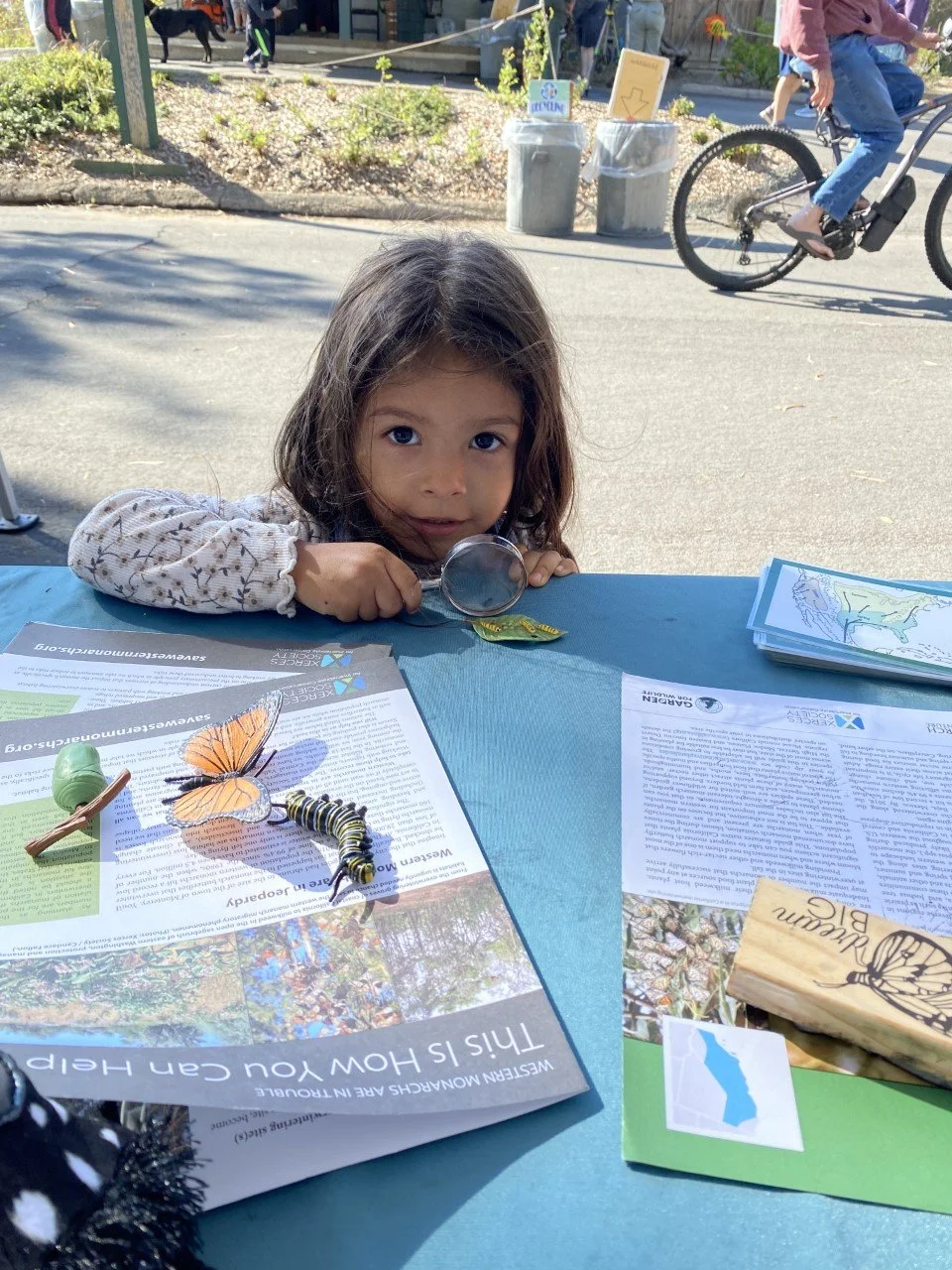
Bringing Wonder to your Community
Our engaging Wonder curriculum brings the joy of discovery and museum specimens to every learner in Monterey County! You can find us at libraries, community centers, and other venues throughout the County.
-
OUr Wonder curriculum is designed to engage people of all ages and includes three themed interactive carts: Pollinators and Flowers, People and our Land, and Monterey Bay Wildlife. Each cart features local and native specimens from Monterey County and offers bilingual interactive activities such as opening drawers, flower dissections, scavenger hunts, and cultural crafts.
-
The first cart is named "Pollinators and Flowers" and includes three engaging activities: "Be a Bee," "Match the Pollinator," and "Flower Dissections."
In the "Be a Bee" activity, participants learn about the pollination process between flowers and bees. The "Match the Pollinator" activity helps individuals understand how different flower shapes, colors, and scents attract various pollinators, such as birds, bees, and beetles. Finally, "Flower Dissections" allows learners to explore the intricate anatomy of a flower by dissecting it, examining it under a microscope, and organizing the flower's anatomical parts.
Along with the three activity carts the cart also includes museum specimens like beetles, bees, flowers, butterflies, and more preserved specimens for all to view.
-
The second cart is named “Monterey Wildlife” and includes three main engaging activities: “Test your knowledge of local wildlife”, Who was here?”, and “Spot the adaptations”.
In the “Test your knowledge of local wildlife” activity, participants will look at clues like skulls, tracks, and fur patterns to guess which local wildlife they are observing. The “Who Was Here” activity encourages individuals to examine images depicting tracks, feathers, and other clues to determine what recently occurred in that image. Lastly, “Spot the Adaptations” invites participants to observe an animal puppet and identify characteristics that enhance its chances of survival.
Additionally, this cart is heavily equipped with museum skulls, furs, claws, and craft activities like stenciling local wildlife tracks!
-
The third cart is named “People and Our Land” and includes three engaging activities: “Cart scavenger hunt”, “Chinese Fishing Village photos”, and “Ohlone basket weaving”.
In the "Cart Scavenger Hunt" activity, participants will search for materials in the cart and learn how these materials were used by the people of Monterey Bay. The "Chinese Fishing Village Photos" activity includes questions next to the CFV photos, which are designed to encourage individuals to immerse themselves in the past. The third activity, "Basket Weaving," provides cultural background on the significance of Ohlone basket weaving to the Ohlone people and includes instructions on how to weave an Ohlone basket.
-
Call us and we’ll come to your neighborhood. We provide an immersive learning experience that brings the museum's offerings to your location, creating an unforgettable event for all ages. From exploring how pollination impacts food production to understanding local wildlife through animal skulls and pelts and learning traditional skills like basket weaving or fishing methods, we deliver a fun, engaging experience for all.


Naturalists in Training
An internship for high school students
-
The Naturalists in Training is an internship for high school students. Interns hone their skills in science communication, natural history, and conservation. They use their knowledge and skills to work with Museum visitors of all ages.
There are 2 internship tracks: a summer-only program and a school-year program. Students may choose to apply for one or both, depending on the student’s interests and availability. Students can receive either community service or a stipend for their work.
-
The summer track is recommended for students with summer availability and who would like to gain professional experience in the education field. To apply, students must be entering grade 10 or higher.
Summer track participants must be able to attend two all-day workshops (Saturday, May 22 and Saturday June 5), a half-day workshop (Saturday, August 7) and must have enough availability for at least 2 weeks of summer camp (Mon-Fri from June-July, 8:15 am - 4:15 pm).
Read the full program description from 2026 linked here.
Applications for summer 2026 are closed. They will reopen in January 2027. Leave your contact information below, and we will notify you once applications are open.
Questions? Email the Volunteer Coordinator.
-
The school year program is recommended for students with school year weekend availability and who would like to gain experience in science communication and natural history. To apply, students must be entering Grade 9 or higher.
Participants must be able to attend an all-day workshop (Saturday, June 5) and a half-day workshop (Saturday, August 7). They must have enough availability to participate in 6 Science Saturday shifts (last Saturday of the month, 6-hour shifts) and 6 flexible volunteer shifts throughout the school year.
Students can participate in optional enrichments engaging in local field science and conservation. They gain experience, mentoring, and can receive either community service or a stipend.
Read the full program description from 2026 linked here.
Applications for the 2026-2027 school year program are closed. They will reopen in January 2027. Leave your contact information below, and we will notify you once applications are open.
Questions? Email the Volunteer Coordinator.
-
For the summer program, any current high school student (going into grades 10 or above) may apply. For the school year program, any student going into grades 9 - 12 may apply.
A Naturalist in Training needs to enjoy working with children and the public, have an appreciation for science and nature, and be willing to learn new things. Look at the descriptions of the summer and school year tracks to see which ones most closely match your interests and availability.
NITs are required to follow safety safety guidelines, show up on-time to all assigned shifts, and prepared for trainings and volunteer shifts. See the descriptions of the summer and school year programs for availability requirements.
-
Read the full program description from 2026 linked here.
Applications for summer 2026 are closed. They will reopen in January 2027. Leave your contact information below, and we will notify you once applications are open.
Questions? Email the Volunteer Coordinator.
Applications for the 2026 summer and the 2026-2027 summer program are closed. They will reopen in January 2027. Leave your contact information below, and we will notify you as soon applications are open.
Questions? Email the Volunteer Coordinator.
Museum Field Trips
During the school year, we offer hands-on, standards-based field trips for TK-5th grade students on local cultural and natural history topics. Each field trip is 1 hour long. They include a presentation, interactions with hands-on activities and museum specimens, and chaperone-guided exploration of the Museum.
We can accommodate 2 classes in each 1-hour time slot. These programs are free for Monterey County schools.
Field Trip Scheduling
Please select your field trip theme and make a booking using the form below. Your field trip is not confirmed until you receive confirmation from the Museum's Education Department. If you have any questions about a field trip or class program, please contact education@pgmuseum.org.
-
Click each link for a description of each of our field trips.
PreK-TK Environmental Explorers
K-2 Coastal Ecology
-
Overwintering monarchs can be viewed in the Pacific Grove Monarch Sanctuary (1 mile west of the Museum) generally November through February.
Schools can check a box on the reservation form to add a visit to the Monarch Sanctuary. We will provide a docent-led ½-hour program when a monarch docent is available, and a teacher-led guide when a docent is not available.
Please check in with us before reserving a Monarch Sanctuary Field Trip. The Western monarch is a highly threatened species whose population has declined by over 99%. We cannot guarantee there will be monarch butterflies present.
Find the latest monarch count at our Monarch Page.
-
-
Find answers here!

Museum Summer Camps-Check Back Here in February for More Information!
-
Discover a world of science and adventure with PG Museum Summer Camps! We offer 6 weeks of summer camps from June - July for children grades K-5. Camps are Monday - Friday, 9 am - 3 pm.
Your child will explore the outdoors and make new friends while doing a host of fun activities. Our camps are a Choose Your Own Adventure of fun, and depending on the camp, they might get to polish rocks, hunt for insects, inspect fossils, visit beaches and forests, perform an urchin dissection, and build strange machines.
Every day is filled with new experiences, projects, games, and the outdoors, all with our award-winning education team and fantastic interns.
Questions? Email our Education Team.
-
For the 2027 summer camps, registration for Family Members and above will begin in mid-February. Family Members and above also receive summer camp discounts.
Registration opens for the public will be by the beginning of March 2027.
Many of these camps do sell out so we encourage early signup.
If you’re interested in joining, renewing, or upgrading your membership you can do so by clicking here
We do offer scholarships, though resources are limited and depends on foundation support. Please contact our Education Team for questions.
-
The Pacific Grove Museum of Natural History is committed to helping every camper find their niche and blossom at Camp. We design activities that emphasize exploring nature and experiencing the outdoors in a safe, inclusive, and child-centered environment.
Each camp is led by two of our highly trained and award-winning educators and supported by two high school Naturalists in Training interns who teach as they learn.
Each week has a special theme where additional staff and educators bring specialized expertise and to working with campers outside on adventures and in cozy museum spaces. Campers try new things and learn about nature as they grow friendships with their fellow kids. Games, activities, science experiments, field trips, and projects build campers’ confidence as part of a team.
In April 2027, we will offer a free Camp Preview Day for families to meet our Education Team, ask questions, and experience a day in the life of camp. Registration for Camp Preview Day will open in 2027.