Welcome to our Native Plant Garden

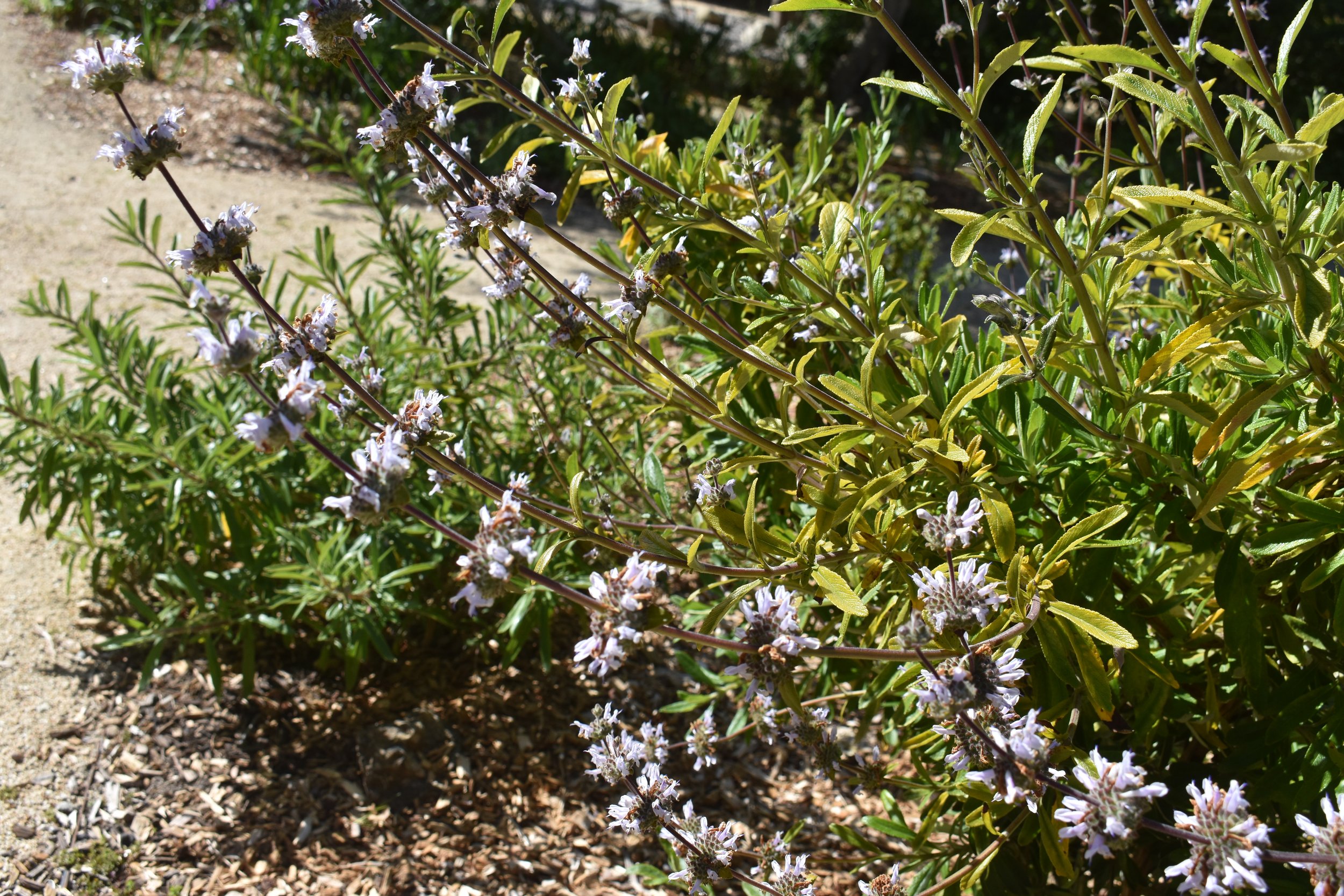
Our garden shows the remarkable diversity of plants that thrive in central California. California is a global biodiversity hotspot, with many plants and animals seen nowhere else on Earth. First established in 1900 to preserve local flora, our Native Plant Garden has grown into a vital habitat for birds, pollinators, and other wildlife. Come and explore!

Plants & Pollinators
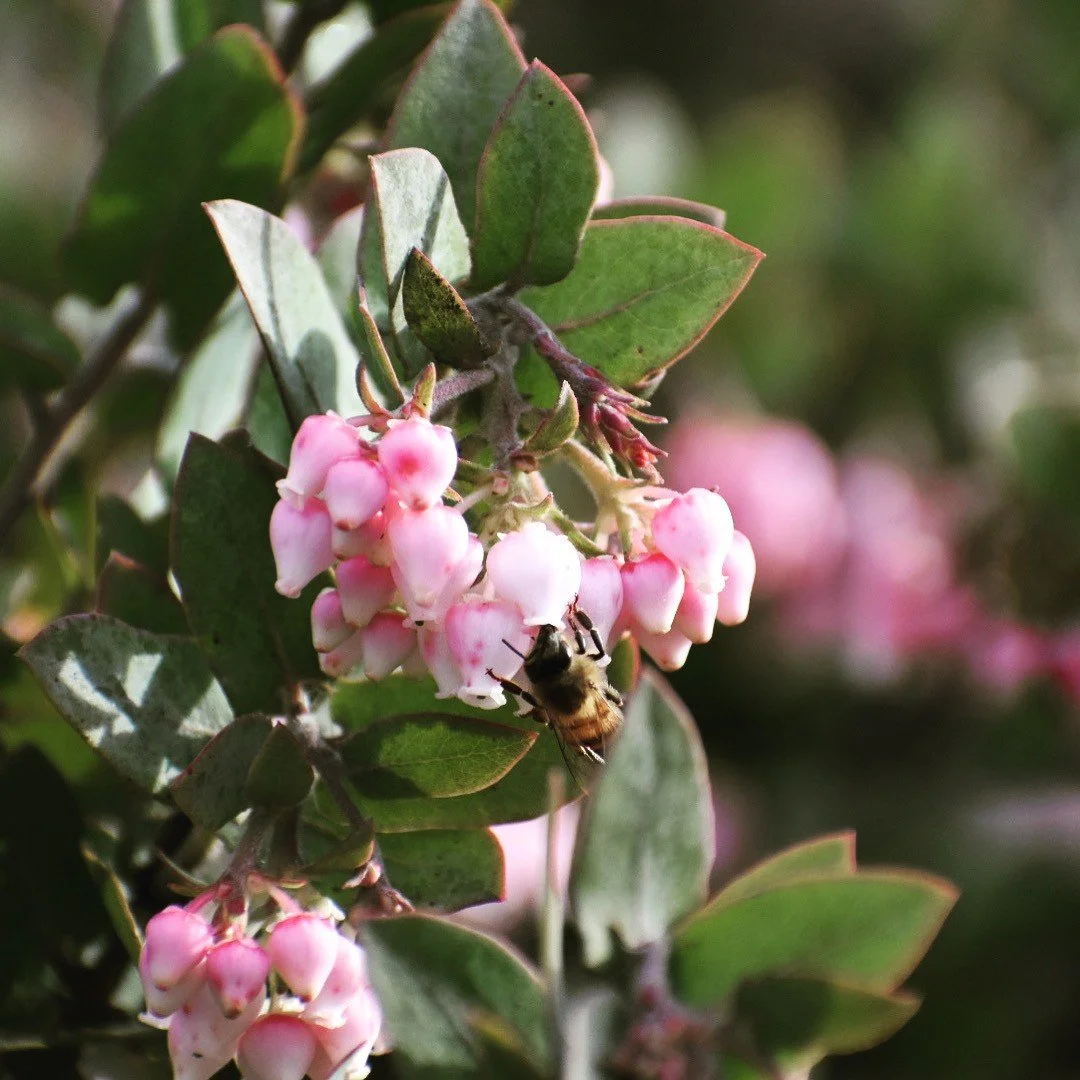
  • Plants are the base of the food web: all creatures, at some level, depend upon plants for food. Our structures, foods, and medicines stem from plants!

    When you support healthy habitats with native plants, you are helping all wildlife from the ground up.

    Native plants

    • Native plants occur naturally in their ecosystem without human introduction. Thousands of years of coevolution and natural selection create healthy niches for native plants and animals.

    • Native plants are better for local pollinators. You find a great diversity of bumble bees, butterflies, and more when there are native plants.

    • Native plants are often more resistant to insect pests – native plants do not require pesticides or fertilizers to survive, and, once they are established, they need little to no watering to thrive. Many native species are deer-resistant, as they have had thousands of years of co-evolution to keep themselves safe.

    Non-native plants

    • These plants were introduced, intentionally or accidentally, into a new environment by humans.

    • Many non-native plants do not thrive in their new habitat. Many ornamental plants — which require excess amounts of water, fertilizer, or harmful pesticides just to stay live — fall in this category.

    • Other non-native plants grow quickly, establish themselves on many sites, and disrupt the ecosystem. Find local volunteer habitat restoration projects at mrmalliance.org.

    Weeds

    • This is a generalized term for anything “unvalued” by some aspects of society.

    • Some “weeds” are highly beneficial. Milkweed is the host plant for monarch butterfly caterpillars, and milkweed flowers produce high-quality nectar for other pollinators. Yet this plant is devastated by herbicide sprays.

    • You can help wildlife by reducing your use of herbicides. Instead of sprays, use hand-removal of weeds. Learn more at xerces.org/pesticides.

  • Pollinators transfer pollen between plants. This makes plant species healthier. A world without pollinators is like a world without flowers.

    Did you know that over 70% of the crops we depend on need pollinators?

    Bees

    • Did you know California has over 1,600 species of bees? Many of them are small, solitary, and don’t have stingers. Many, however, at risk.

    • Bumble bees are the only social bees native to North America. Large and fuzzy, bumble bees pollinate a wide variety of flowers. Learn more at xerces.org/bumble-bees.

    • Bees can see ultraviolet light. Often, small blue or purple flowers (especially with what look like white to human eyes) are looking for bees to pollinate them.

    Butterflies & Moths

    • For flowers that need some distance, butterflies are perfect for traveling farther.

    • Flowers, that have larger spaces for butterflies to land on, like daisies, are looking for butterflies as pollinators. These often come in shades of yellow, orange, or pink.

    • Moths are pollinators, too! Being nocturnal, they are vital for flowers that bloom at night to avoid predation.

    Hummingbirds

    • A single hummingbird can pick up even more pollen than a bee! Trumpet-shaped flowers are perfect for a hummingbird’s long beak.

    • Hummingbirds have amazing memories to keep track of the flowers in their territory.

    • Hummingbird feeders can be useful, so long as the sugar water (1 part sugar to 4 parts water) is replenished daily and the feeder is cleaned regularly.

    Other pollinators

    • Some species of bats are pollinators. Because they are nocturnal and can travel great distances, they are perfect pollinators for cacti.

    • The hairy legs of flies pick up pollen, too. Each fly may not be as effective as a bee. But flies are so numerous, their overall impact is very helpful.

    • There are a few species of beneficial, pollinating wasps and beetles.

    • Other beneficial insects include lady beetles and dragonflies. They are carnivorous, feeding off aphids and other common garden pests.

  • Monterey County is remarkable for its variety of habitats, each one bringing in their own unique plants and animals.

    …go into habitats here?

Ethnobotany & Culture

Seasonal Wheel

Traditional Ruk

Herbal Plants

Geology & Fossils

  • Monterey County has a diverse array of geological formations that form the bedrock of natural beauty.

    The main rocks formation found in Monterey County include:

    • Monterey Formation-

    • Carmelo formation -

    • Fransican formation -

    • Purisima Formation -

    The most common rocks to Monterey County are:

    • Granite and granodiorite - formed XX million years ago under the earth in the southern end of the Sierra Nevada mountains. The granite was moved north on the Pacific Plate.

    • Monterey Shale -

    • Carmel sandstone - a cream-colored shale with iron oxides providing orange colorations.

    • Conglomerate and turbedite - conglomerates are sedimentary rocks with rock fragments larger than sand. Essentially, a bunch of rocks stuck together.

    • Basalt and andesite - rounded rocks in river beds

    • Marble - this metamorphic rock is mostly heated and pressurized limestone.

    • Serpentine and jade - Serpentine is California’s state rock. It is an igneous rock rich in magnesium. Jade is a metamorphic rock whose chemical makeup is similar to serpentine. Local Big Sur jade is a type of nephrite jade with dark green hues and water-like wavy patterns.

    Rock or mineral?

    • Minerals are solid, inorganic, naturally forming and have specific atomic orders. For example, quartz is silicon dioxide.

    • Rocks are aggregations of minerals. For instance, granite is mostly composed of quartz, mica, and feldspar.

    Rocks are divided into 3 types:

    1. Igneous rocks are made from magma cooling.

    2. Sedimentary rocks are formed when other rocks weather down and form loose aggregations (think sediment).

    3. Metamorphic rocks undergo a transformation (metamorphosis) through heat and/or pressure.

  • What are fossils?

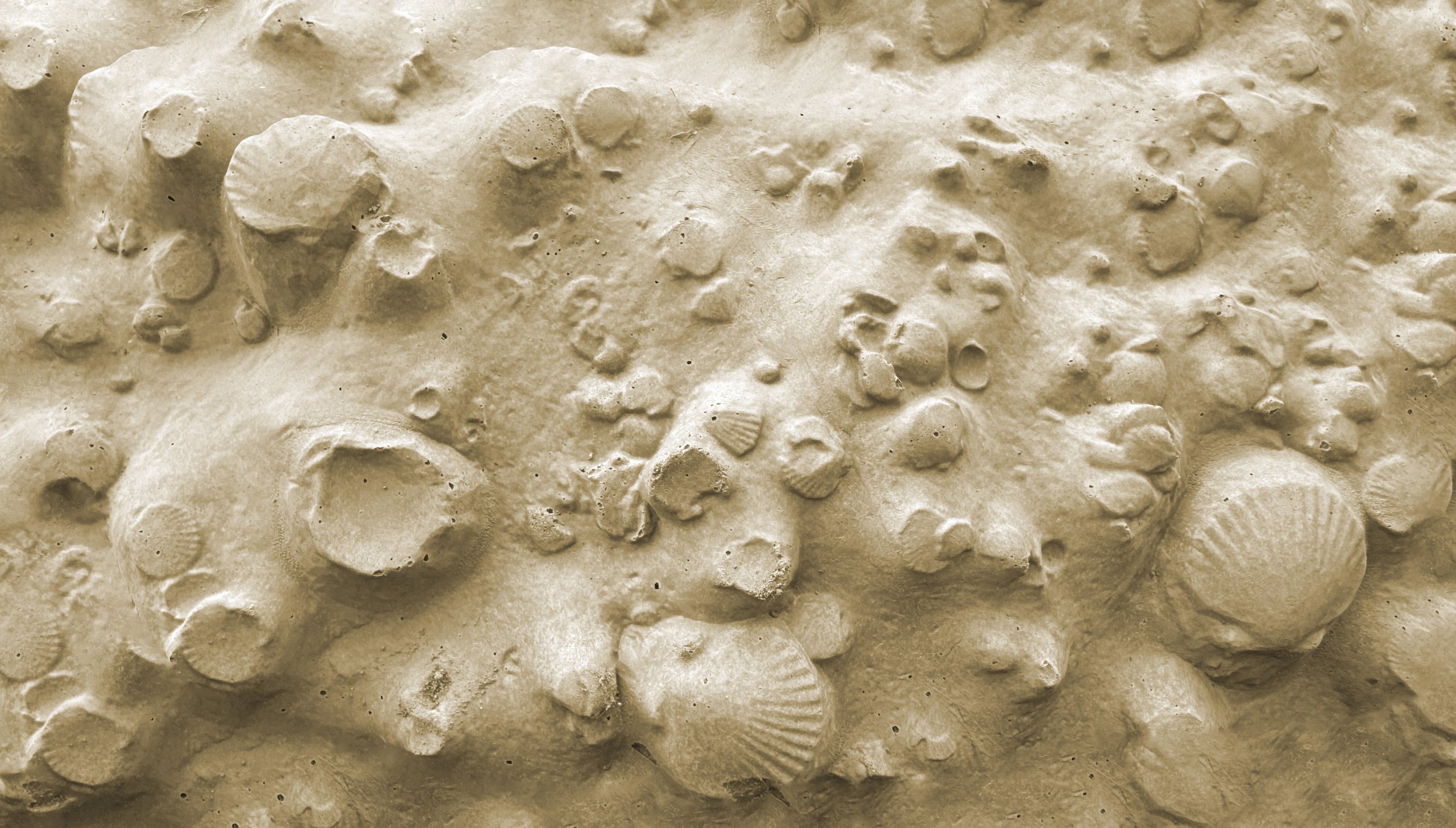
    • Fossils are the rock imprints left behind by ancient organisms.

    • They are not shells, but are made of rocks and minerals.

    • The process of fossilization takes at least 10,000 years!

    • Fossils give us an incredible understanding of ancient life.

    How are fossils formed?

    • Fossils form in many ways, but most form when a living creature dies and is quickly buried by sediment mud, sand, or volcanic ash.

    • Soft tissues often decompose, leaving only the hard shells or bones behind.

      In special circumstances, the soft tissues can be preserved.

    • After the organism is buried, more sediment builds. Eventually, all the layers become rock.

    • With time, the layers are eroded away, exposing the fossil.

  • Did you find a fossil in our Fossil Pit? It may be one of these types. Show your fossil to a Museum Docent to learn more.

    Ammonite

    • Do you see a small, tight spiral? It may be the shell of an ammonite, an ancient relative of squids and octopuses.

    • The closest living thing to an ammonite is a nautilus.

    Brachiopod

    • Did you find a heart-shaped shell with vertical lines? It may be the shell of a brachiopod.

    • These are marine creatures that resemble, but are not related to, clams. They still exist today in polar or deep sea waters.

    Crinoid

    • Did you find a small tube? It may be the outer casing of a crinoid, a creature related to sea stars.

    • Crinoids exist today in deep sea waters.

    • The fossil is a circular tube for protection. The rest of the animal has feather-like appendages to catch food drifting in the ocean water.

    Gastropod

    • Did you find something that looks like a snail’s shell? You may have found a type of gastropod.

    • There are over 60,000 species of living gastropods today.

    Horned Coral

    • Does your fossil look like a curved tube with wavy lines? You may have found a horned fossil.

    • Corals are related to sea anemones.

    • The fossil is the outer casing for protection. The animal would have wavy tentacles sticking from the “horn” to catch food.

    Nautiloid

    • Did you find a fragment of a spiral with ridges along the outer side? It may be a nautiloid fragment.

    • The ancient seas (about 400 million years ago) had many species of marine creatures related to today’s octopuses and squids.

    • What you are looking at is part of the animal’s protective shell. There are many types of nautiloid shells with a great diversity of shapes.

    Shark Tooth

    • Jaws and teeth are the only parts of sharks that fossilize. The rest of the shark’s skeleton is made of cartilage, which is too soft to fossilize except under extraordinary circumstances.

    • Sharks grow their teeth continuously. They have no “adult” or permanent teeth.

    • Sharks have been around for over 400 million years. That’s older than dinosaurs or even trees!

Thank you to our Funders, Partners, & Supporters!


Community Stakeholders

Julie Lorenzen
Nancy Enterline
Carla Marie Munoz
Desiree Munoz
Violet Smith
Nick Stong
Kat Morgan

Jamie Jarrard
Pat Regan
Rachel Saunders
Darcie Fohrman
Jennifer Bickett
Donna Wobber


Donors/Supporters

2023 Donors

& the Shelley Fiss Family


Design & Build Team